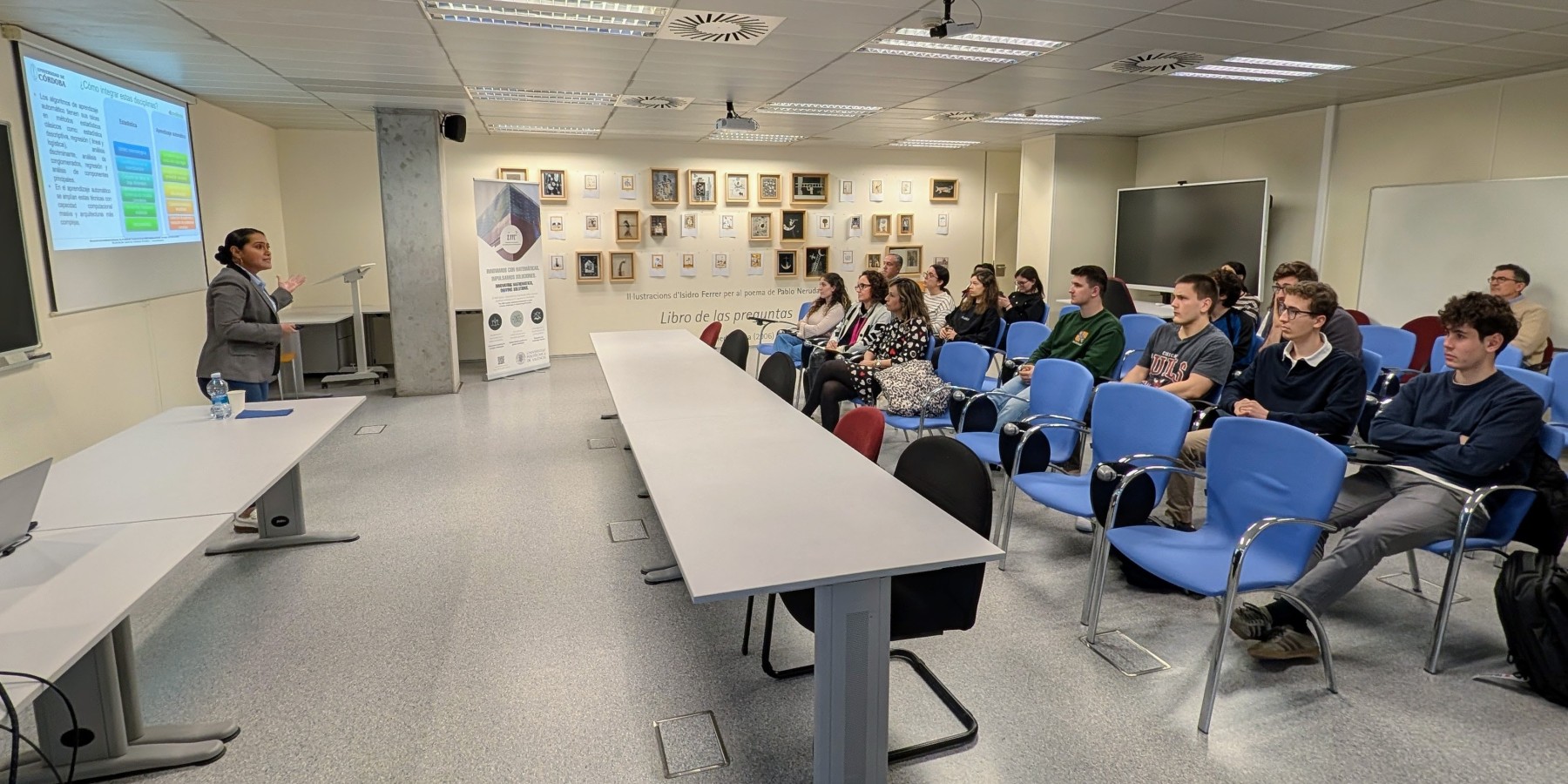
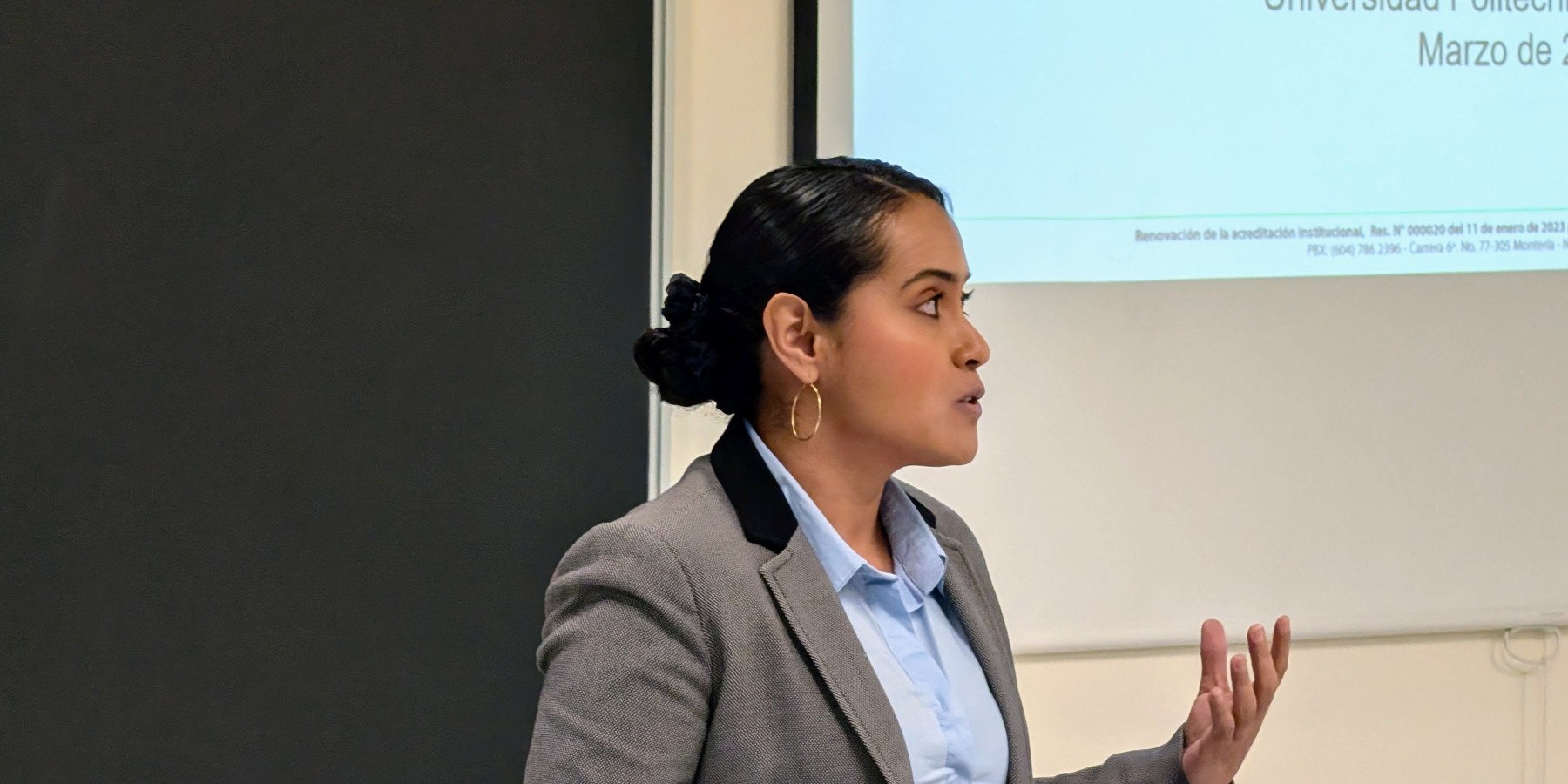
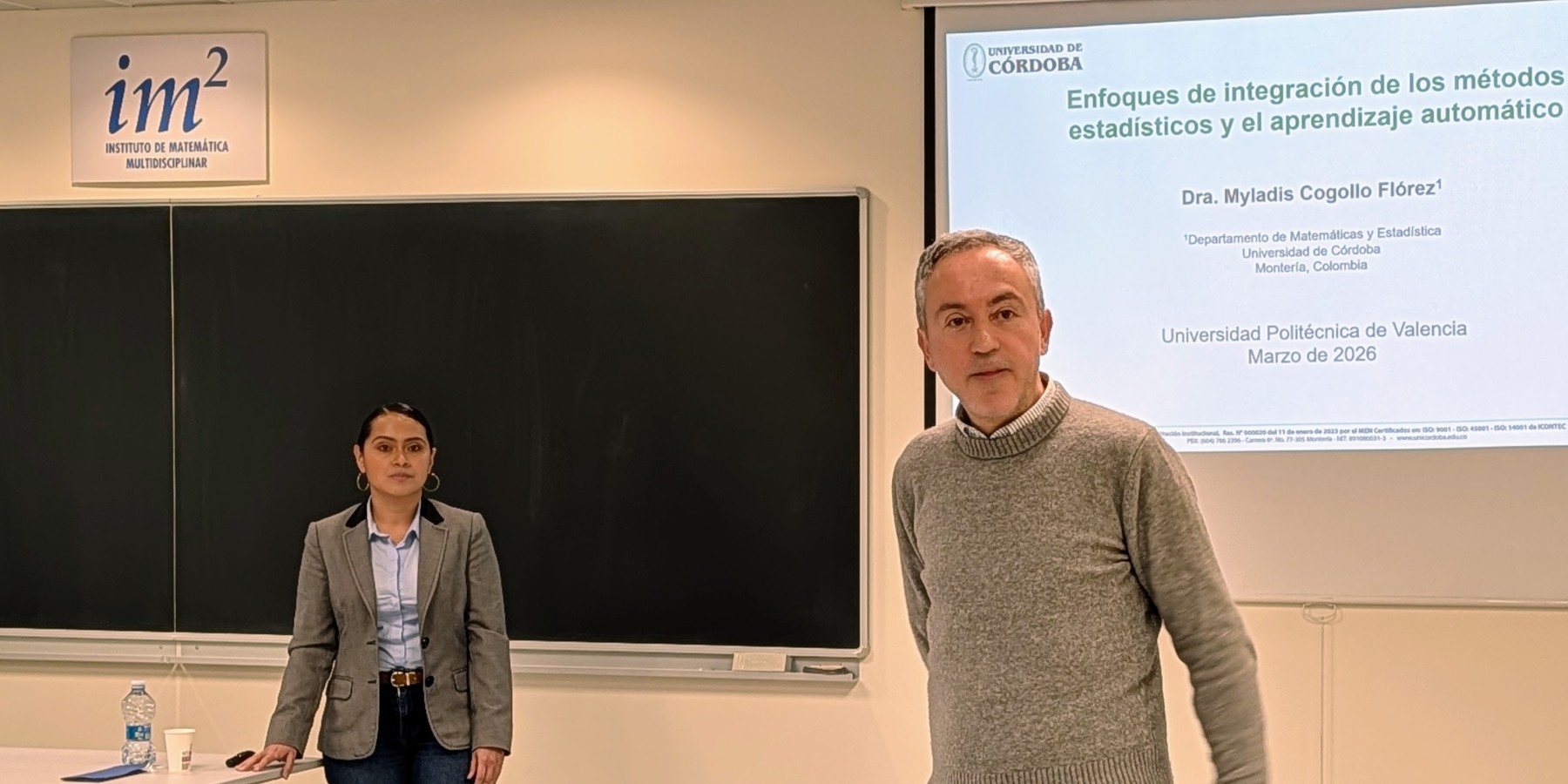
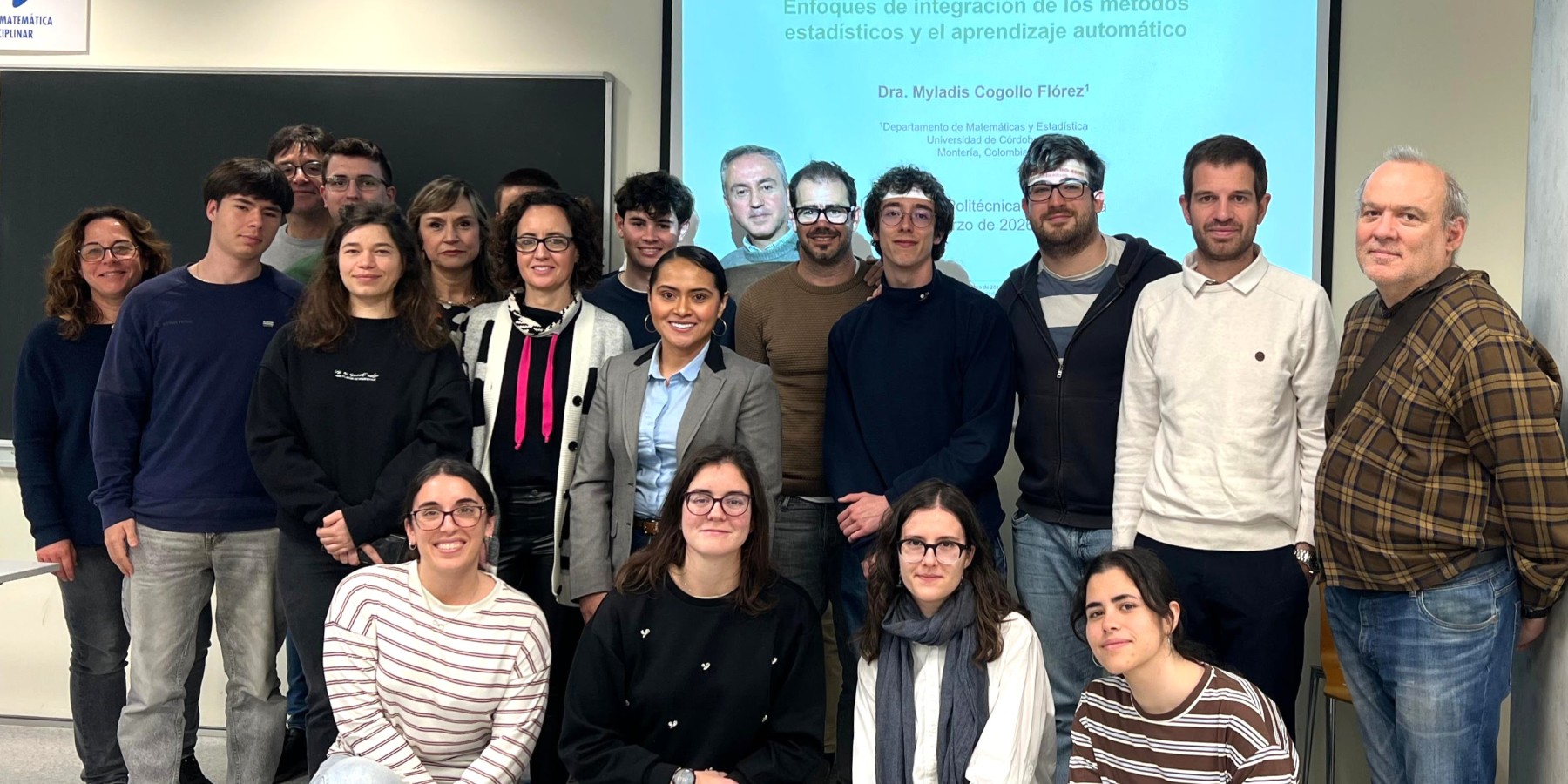
The IMM Seminar hosted a talk by Professor Myladis Cogollo from the University of Córdoba (Colombia) that analyzed the relationships and integration possibilities between statistics and machine learning in the current context of data science.
During her presentation, Professor Cogollo explained how, although both disciplines are often presented as competing approaches due to their foundations and methodologies, they can actually complement each other effectively. Statistics traditionally focuses on the analysis of phenomena at the population level through the controlled collection of data and the use of models that quantify uncertainty. Machine learning, on the other hand, emphasizes the development of algorithms capable of learning from large volumes of complex data, although often with models that are difficult to interpret, known as “black boxes.”
The talk did not propose a choice between the two approaches, but rather suggested integration strategies that leverage the strengths of both disciplines to compensate for their respective limitations. In particular, three main lines of work were presented.
First, a hybrid predictive modeling approach was presented that combines time-series analysis, statistical-based variable selection, and artificial neural networks. Second, it was shown that metaheuristic optimization can facilitate parameter estimation in complex statistical models. Finally, the adaptation of statistical quality control methods to imprecise data was discussed, using machine learning techniques.
Professor Cogollo illustrated these strategies through applications in epidemiology, finance, and industry, demonstrating how integrating statistical and machine learning tools can improve forecast accuracy and yield more interpretable, computationally efficient machine learning models.
The seminar sparked the interest of attending researchers and students, who participated in a lively question-and-answer session at the end, highlighting the relevance of interdisciplinary approaches to addressing current challenges in data analysis.