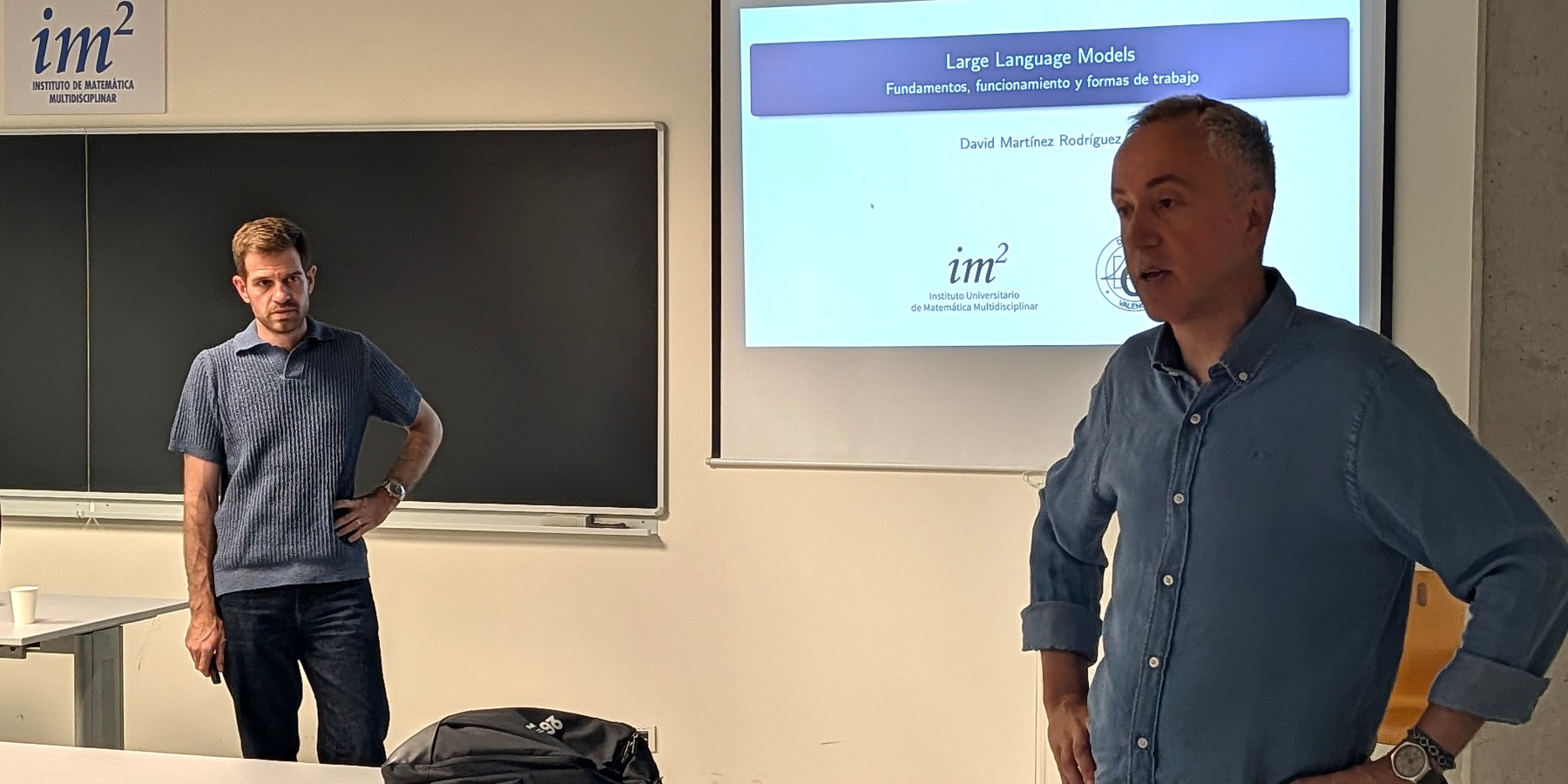
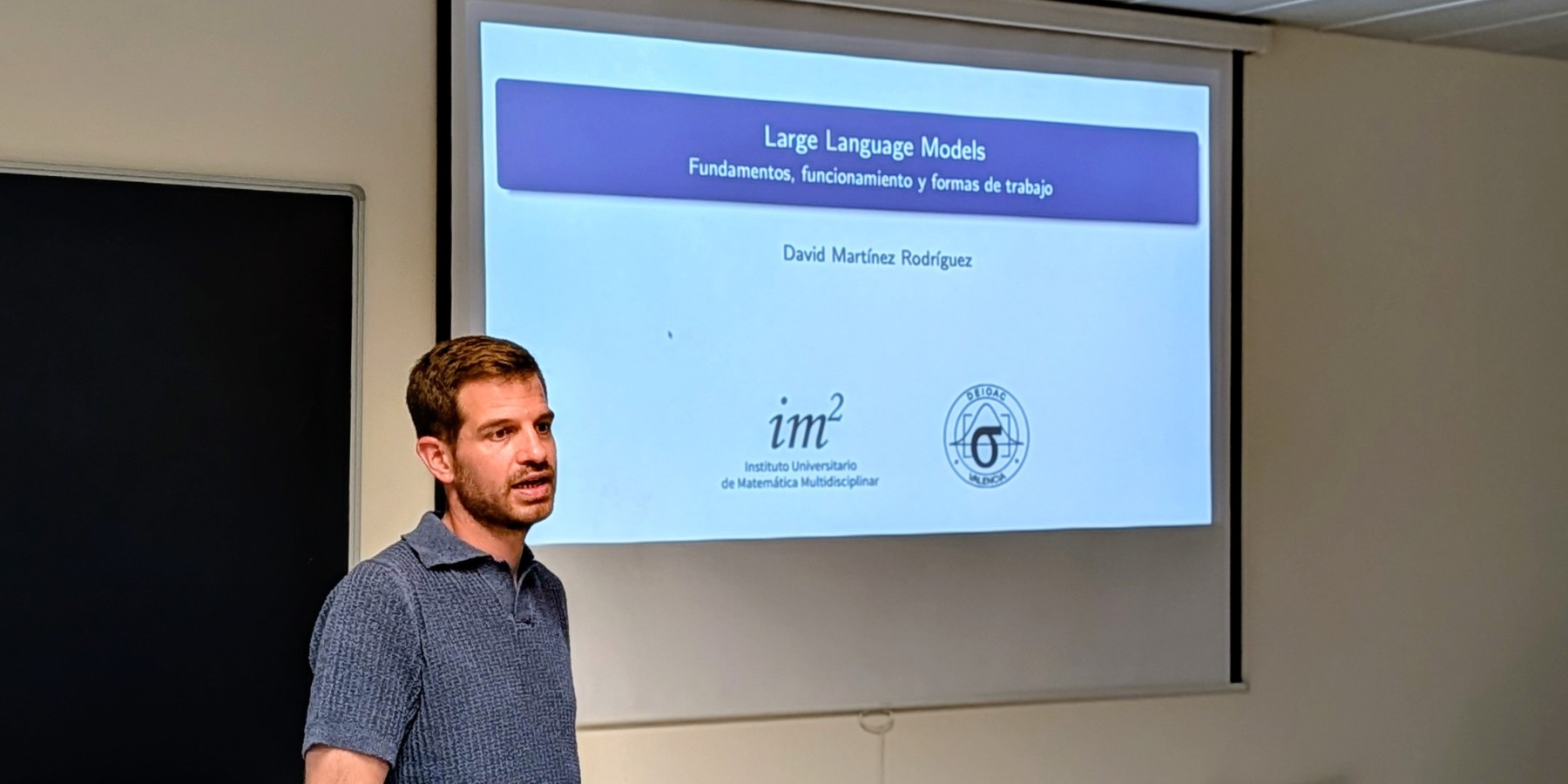
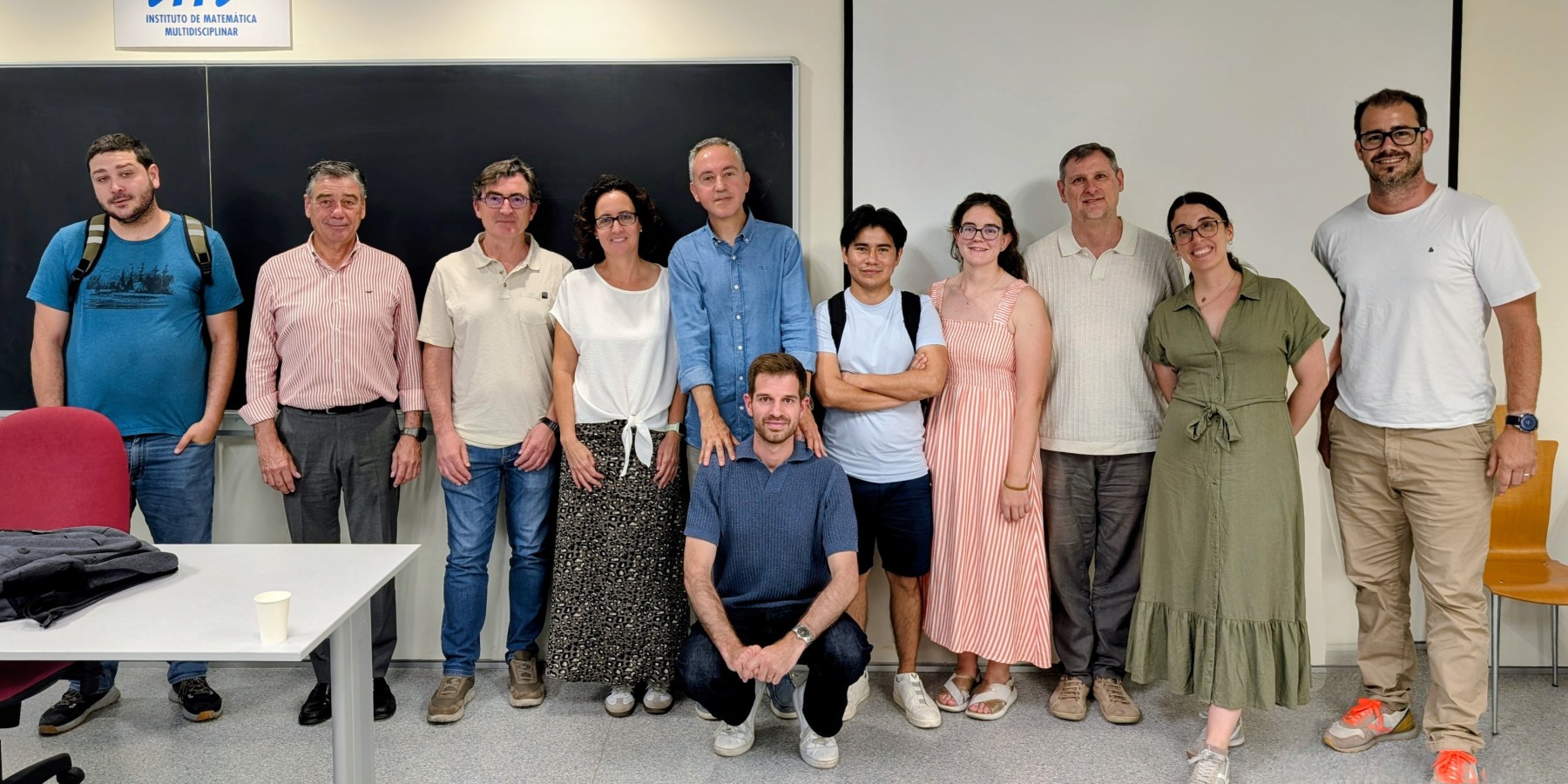
On Thursday, June 4, IMM held a new session of its seminar featuring Dr. David Martínez, who delivered a talk titled “Fundamentals and Use of Language Models in Teaching and Research.”
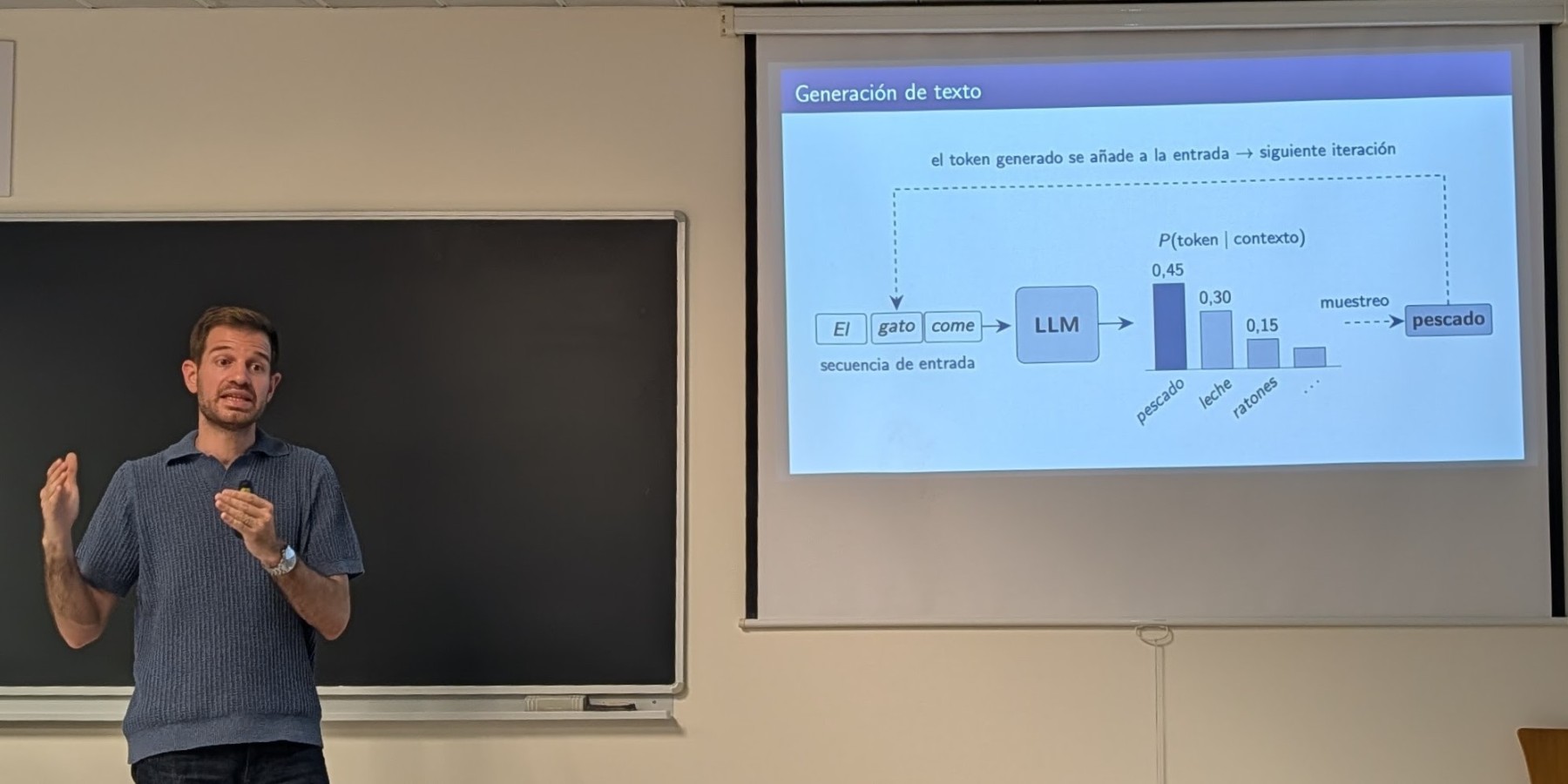
During the session, the speaker clearly presented the operating principles of large language models (LLMs), highlighting that text is generated token by token based on probability distributions, which determines both their behavior and their costs. He also emphasized the central role of context, the proper construction of which significantly improves the performance and efficiency of these systems.
One of the key points was the introduction of advanced usage techniques, such as the chain-of-thought approach, which makes the model’s reasoning explicit and improves the quality of responses. Practical tools such as Obsidian were also demonstrated for knowledge management and the preparation of effective contexts.
The talk also addressed the concept of artificial intelligence agents, defined as systems that extend the capabilities of large language models (LLMs) by integrating reasoning, tool usage, and iterative execution of actions. In this regard, it was emphasized that the orchestration of multiple agents—whether specialized, operating in parallel, or even interacting critically—can enhance robustness and performance in complex tasks.
The presentation sparked considerable interest among attendees by offering a practical and up-to-date overview of the potential of these technologies in both teaching and research.