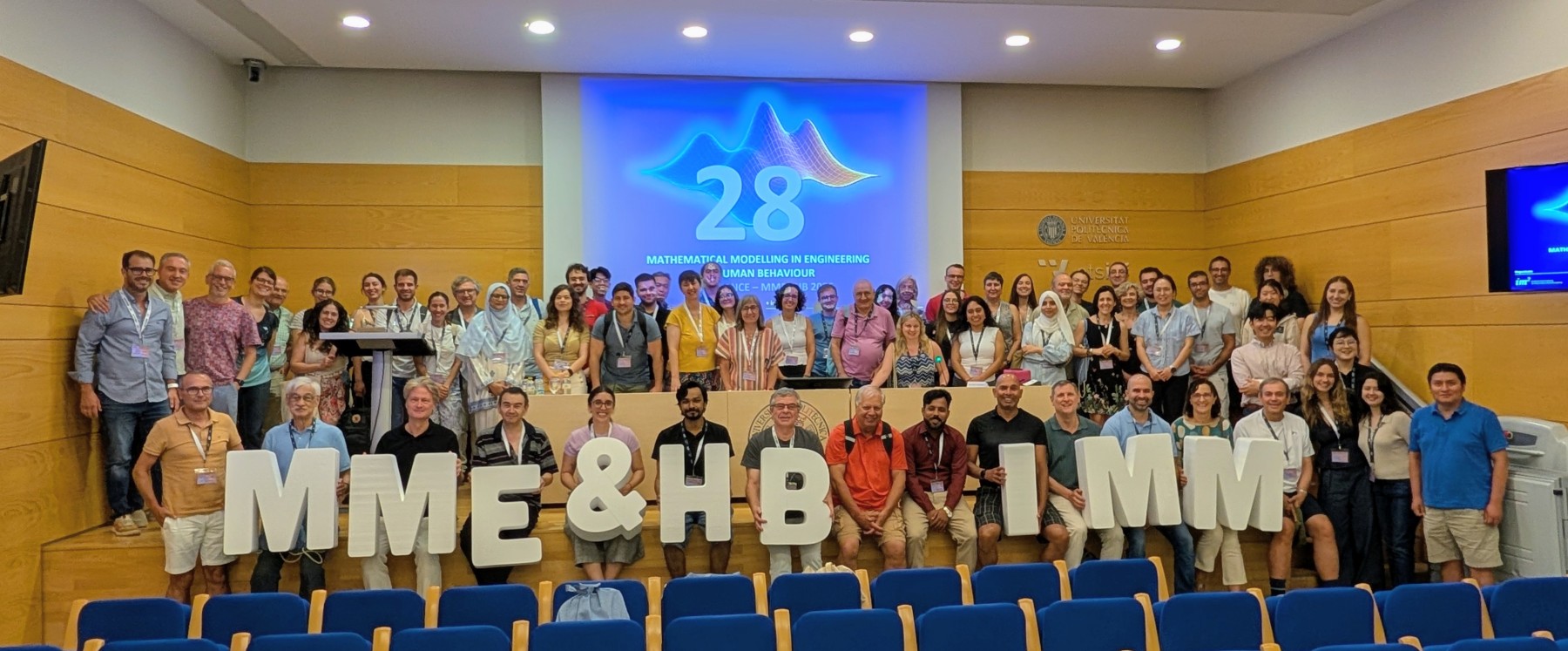
The third and final day of the International Conference on Mathematical Methods in Engineering and Human Behaviour (MMEHB26) brought to a close an edition distinguished by scientific excellence, multidisciplinarity, and the exchange of knowledge among researchers from numerous countries.
The scientific programme began with a first block of parallel sessions focused on different research areas:
MATHEMATICAL METHODS FOR ENGINEERING PROBLEMS
STUDENT RESEARCH SPOTLIGHT
GENERAL
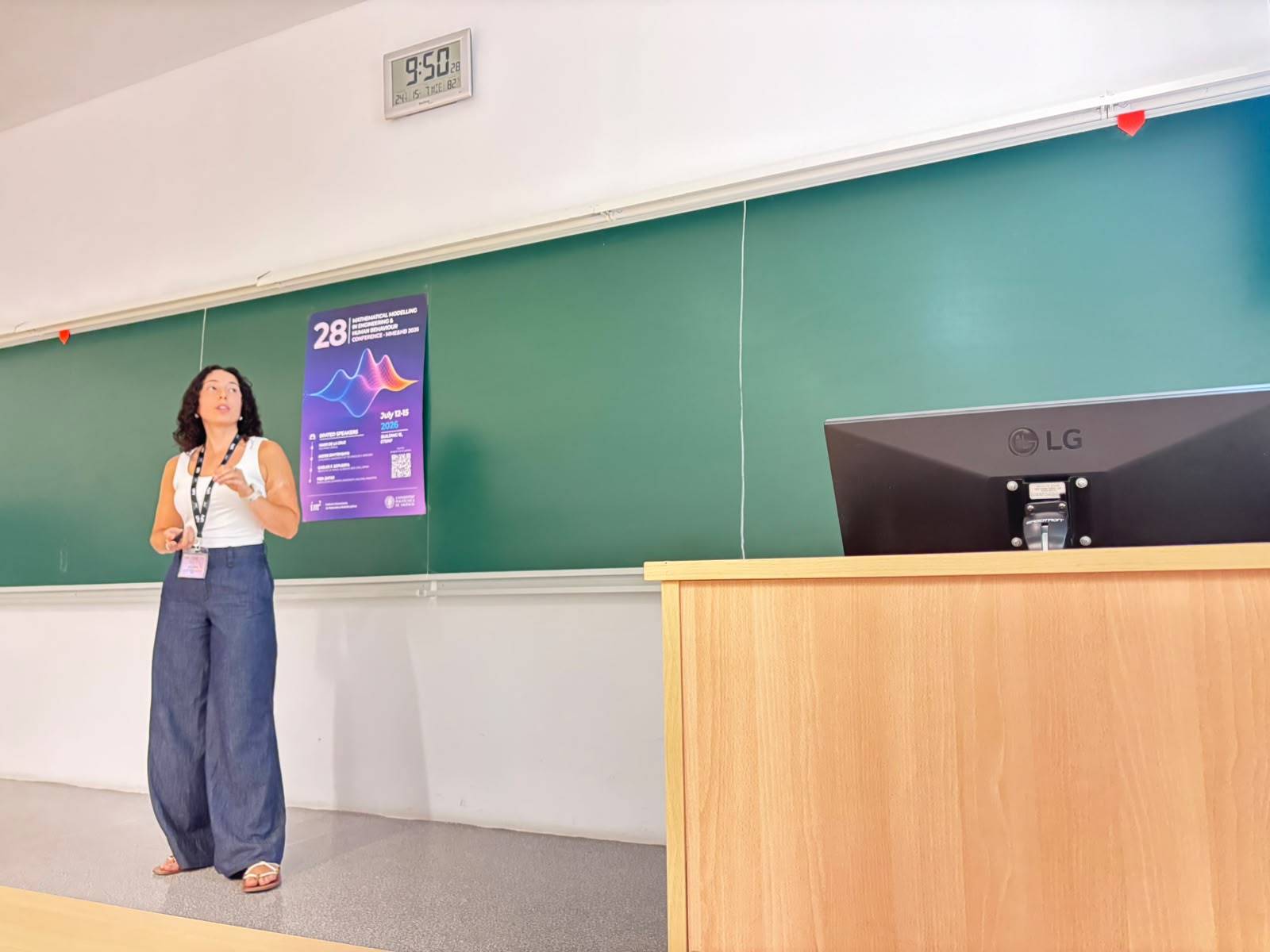
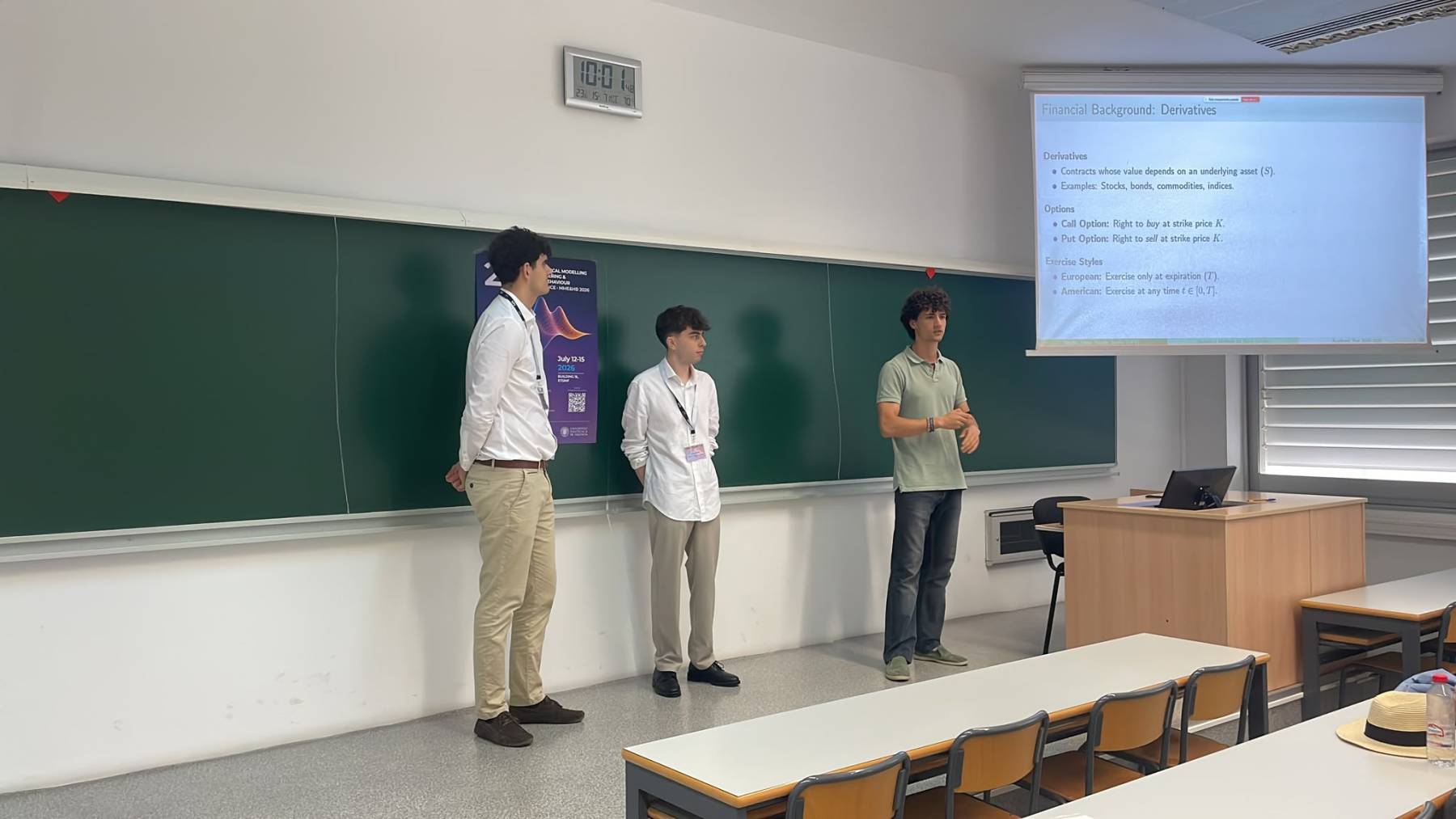
These sessions provided an opportunity to present research related to mathematical applications to engineering problems, while also highlighting the work of students and early-career researchers. The sessions fostered scientific discussion and showcased emerging research directions across a broad range of disciplines.
Following the coffee break, the programme continued with a second round of parallel sessions:
MATHEMATICAL METHODS FOR ENGINEERING PROBLEMS
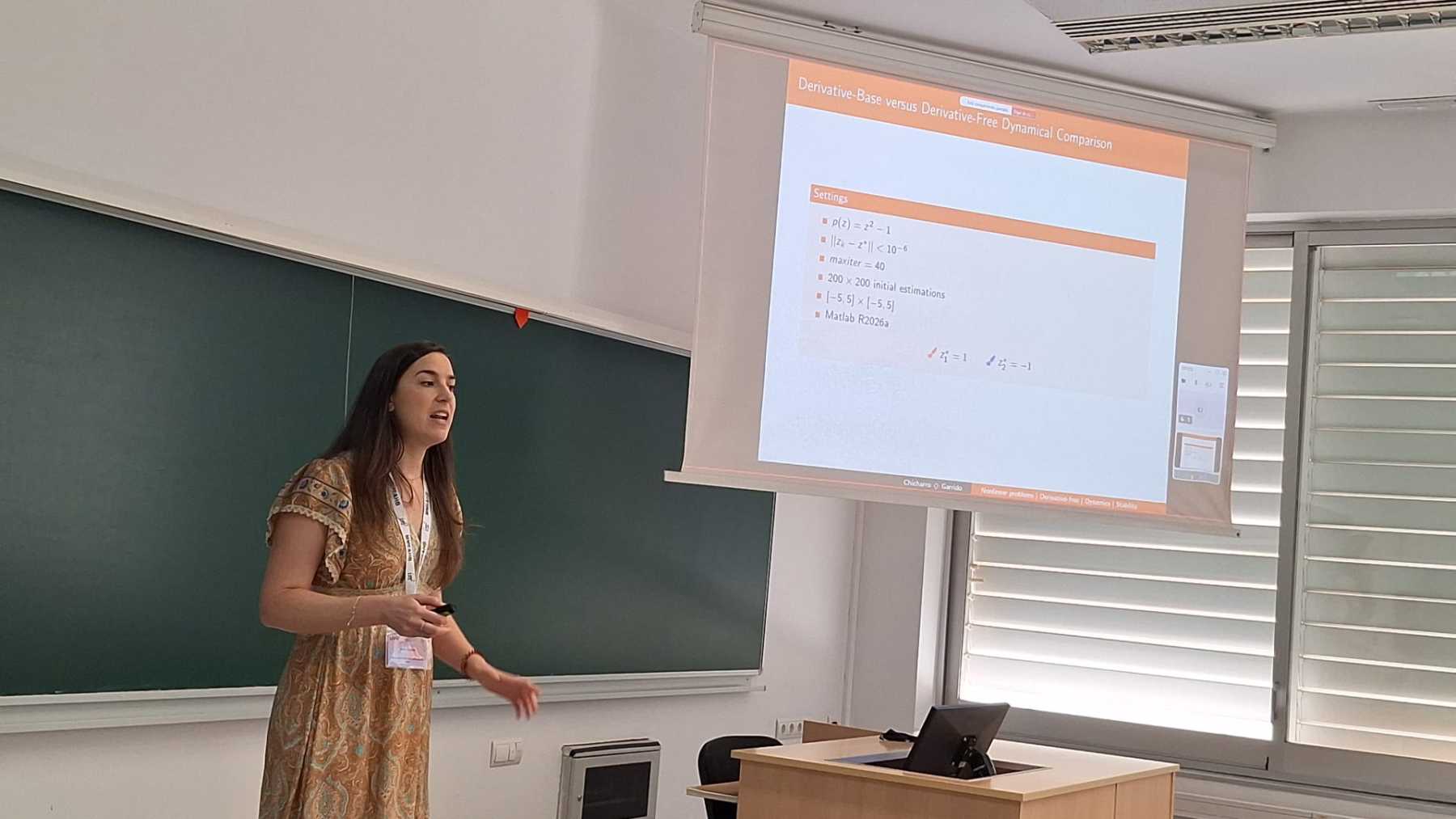
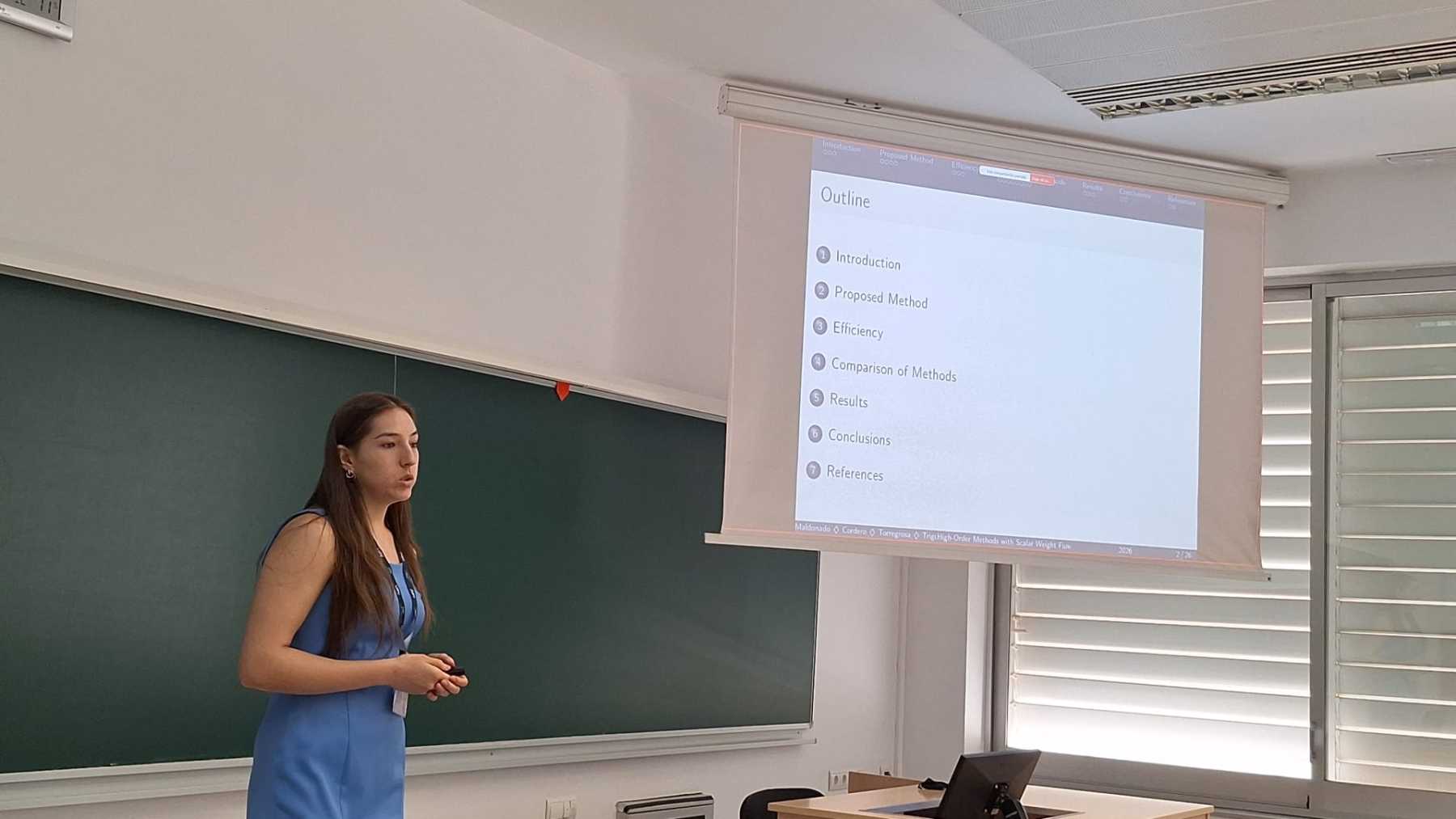
RECENT ADVANCES IN ITERATIVE PROCESSES FOR SOLVING NONLINEAR PROBLEMS
UNCERTAINTY QUANTIFICATION AND MODELLING
DISEASES AND MATHEMATICAL MODELING IN PUBLIC HEALTH
The presentations showcased recent advances in numerical methods for engineering, iterative processes for solving nonlinear problems, uncertainty quantification, and mathematical modelling applied to public health. The sessions were characterized by fruitful scientific discussions and a high level of participation from attendees.
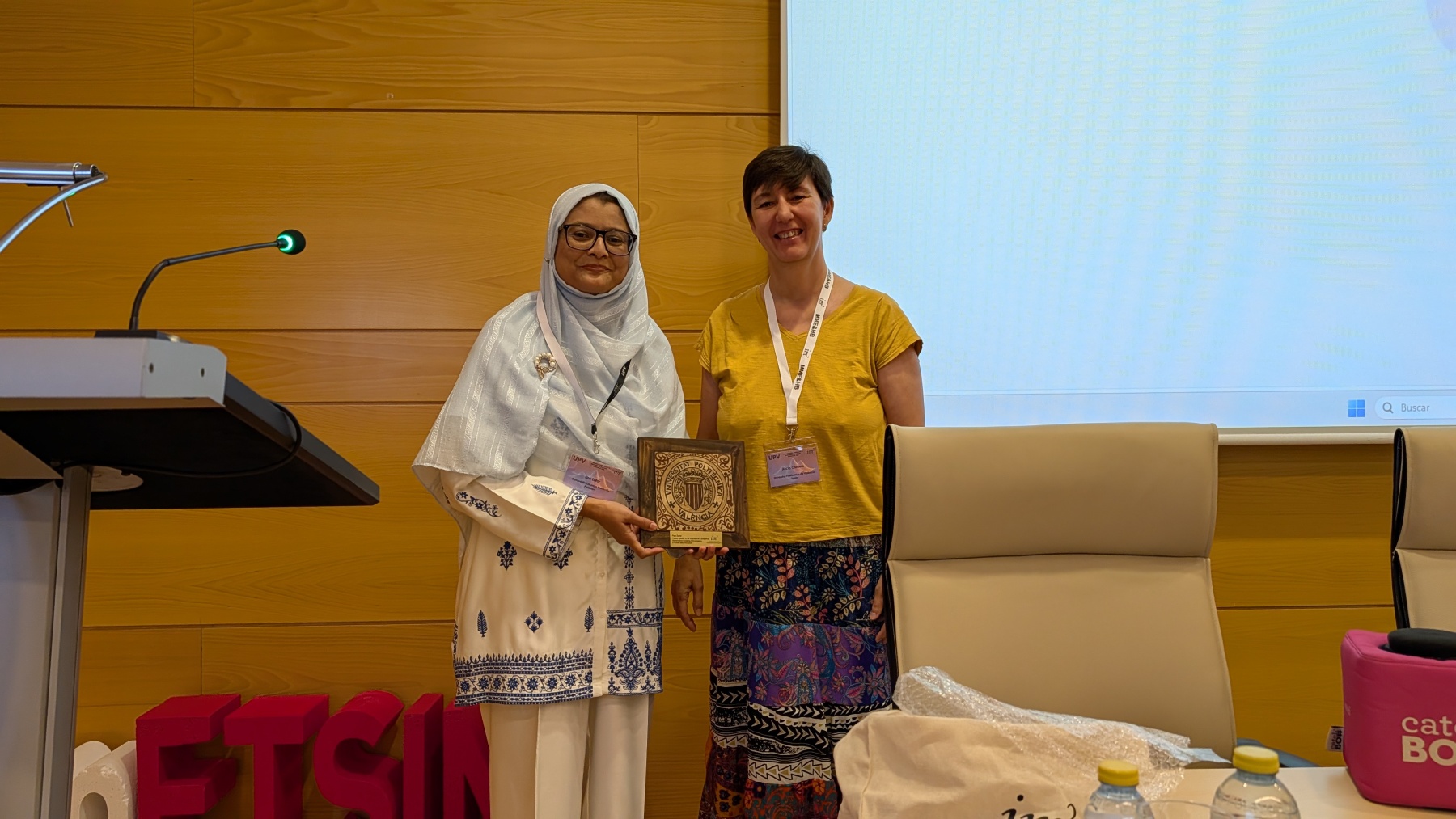
The final plenary lecture of the conference was delivered by Fiza Zafar, from the Centre for Advanced Studies in Pure and Applied Mathematics, Bahauddin Zakariya University (Pakistan), under the title “Mathematics in the Age of AI”. During her lecture, the speaker examined the growing impact of artificial intelligence on modern mathematical research. The presentation explored the role of hybrid neural network-based models, the potential of large language models for mathematical reasoning, formal proof systems such as Lean, and emerging agentic AI tools designed to support the autonomous solution of mathematical problems.
After the scientific programme concluded, the official Closing Ceremony of the conference took place. The session was chaired by Begoña Cantó, Chair of the Organizing Committee; Alicia Cordero, Chair of the Scientific Committee; and Juan Carlos Cortés, Director of the Instituto Universitario de Matemática Multidisciplinar. During the ceremony, the speakers highlighted the high scientific quality of the contributions presented, the active participation of researchers and students, and the spirit of international collaboration that has defined this 28th edition of MMEHB. They also expressed their gratitude to the plenary speakers, participants, reviewers, committee members, and organizing staff whose efforts contributed to the success of the conference.
To conclude the event, participants enjoyed a cocktail reception and wine toast in a warm and relaxed atmosphere, providing an opportunity to exchange final impressions and say farewell after three intense days of academic and scientific activity. This final gathering helped strengthen the professional and personal relationships established during the conference and laid the foundations for future international collaborations.
With this final day, another edition of the International Conference on Mathematical Methods in Engineering and Human Behaviour comes to an end, further consolidating its position as a leading international forum for applied mathematics and its many areas of application. After three days of plenary lectures, parallel sessions, scientific discussions, and social activities, MMEHB26 concludes with a sense of achievement and a strong commitment to future collaboration and innovation.
See you at #MMEHB27!