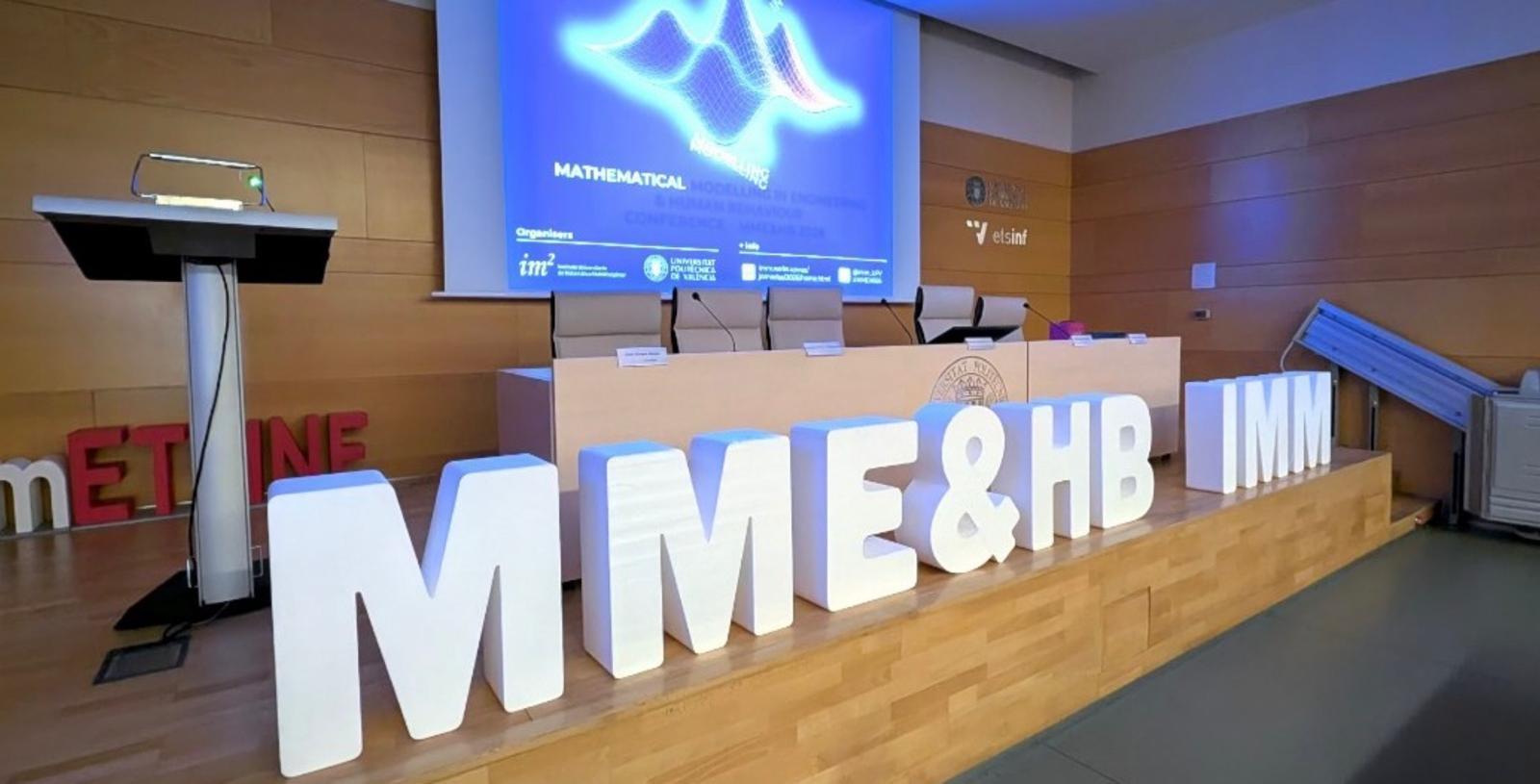
The 28th edition of the International Conference on Mathematical Methods in Engineering and Human Behaviour (MMEHB26) officially began today at the School of Computer Engineering (ETSINF) of the Universitat Politècnica de València (UPV). The first day featured a strong international presence, two outstanding plenary lectures, and several parallel sessions covering a wide range of topics in mathematics and its applications.
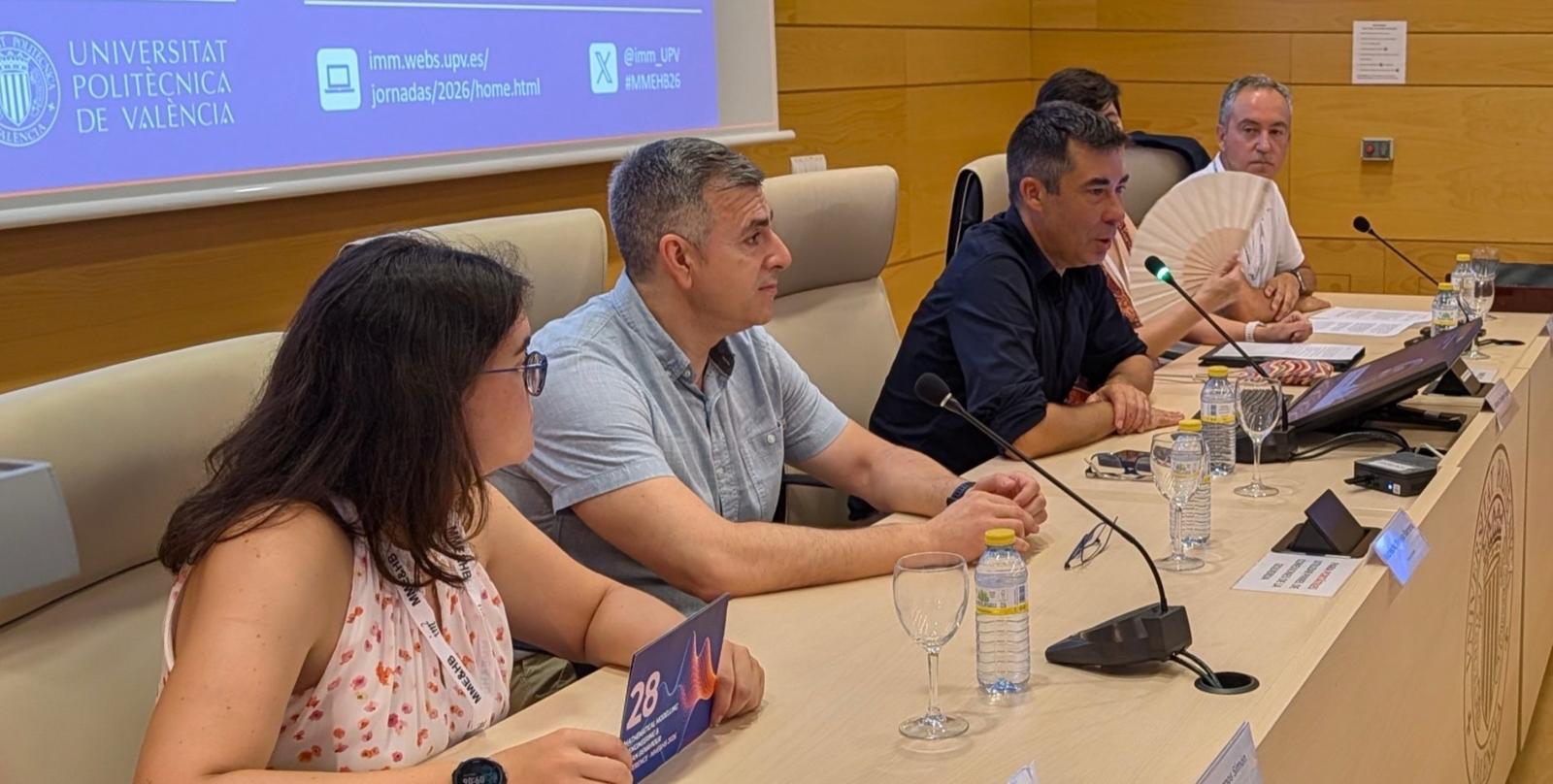
The Opening Ceremony brought together academic authorities and representatives of the conference organization. The speakers included Alberto Conejero, Vice-Rector for Students and Entrepreneurship of the Universitat Politècnica de València; Andrés Terrasa, Director of the School of Computer Engineering (ETSINF); Clara Burgos, Co-Chair of the Organizing Committee; Alicia Cordero, Chair of the Scientific Committee; and Juan Carlos Cortés, Director of the Instituto Universitario de Matemática Multidisciplinar (IMM), the institution organizing the conference.
During their addresses, the speakers highlighted the consolidation of MMEHB as a leading international forum for the exchange of knowledge in applied mathematics, engineering, and human behaviour. They also emphasized the importance of fostering collaboration among researchers from different disciplines and countries.
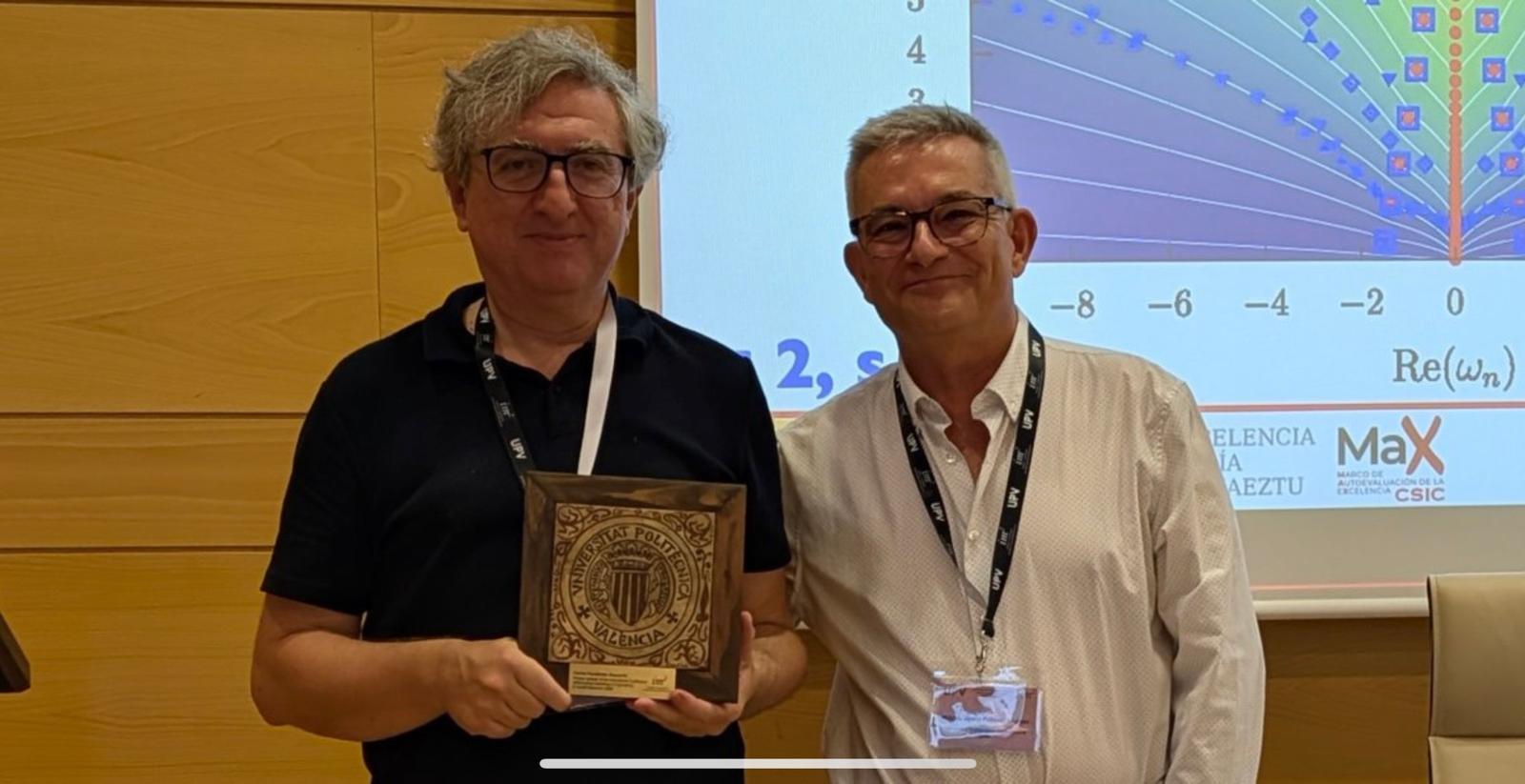
Following the Opening Ceremony, the conference hosted its first plenary lecture, introduced by Màrius J. Fullana.
The lecture was delivered by Carlos F. Sopuerta, from the Institute of Space Sciences (ICE-CSIC), Spain, under the title:
“FROM SOLITONS TO BLACK HOLES: NEW TOOLS TO STUDY BLACK HOLE RESONANCES AND SCATTERING PROCESSES”.
In his presentation, Sopuerta explored a remarkable connection between black-hole physics and the theory of integrable systems. Starting from the well-known Korteweg–de Vries (KdV) equation, originally introduced to describe shallow-water waves, he showed how certain gravitational perturbations of black holes exhibit hidden symmetries related to the associated integrable hierarchy. The lecture attracted considerable interest from the audience and stimulated lively discussions on the deep links between different areas of mathematics and theoretical physics.
The scientific programme then continued with the first block of parallel sessions, during which researchers from different fields presented recent results and emerging research directions. The sessions were:
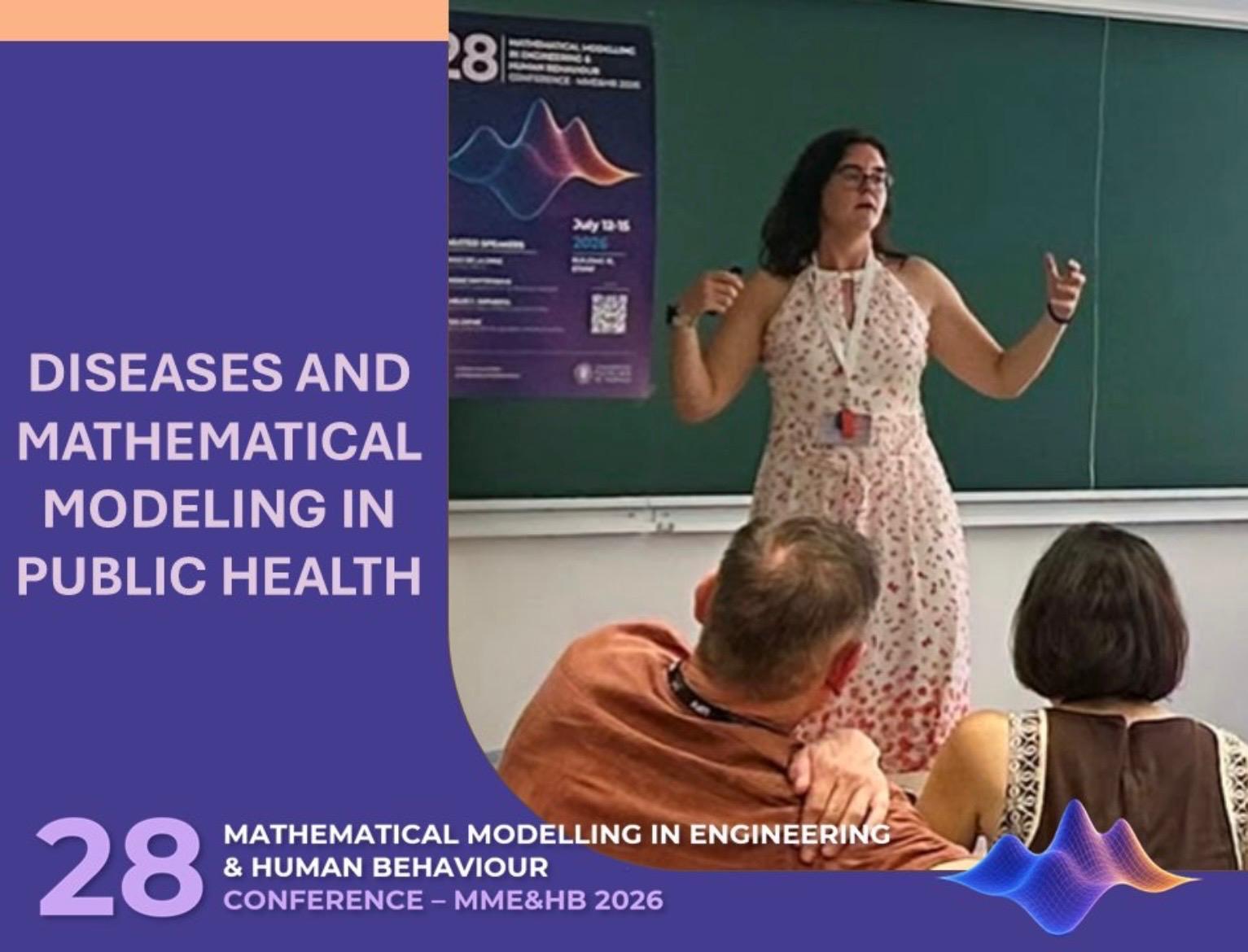
DISEASES AND MATHEMATICAL MODELING IN PUBLIC HEALTH
MATHEMATICAL METHODS FOR ENGINEERING PROBLEMS
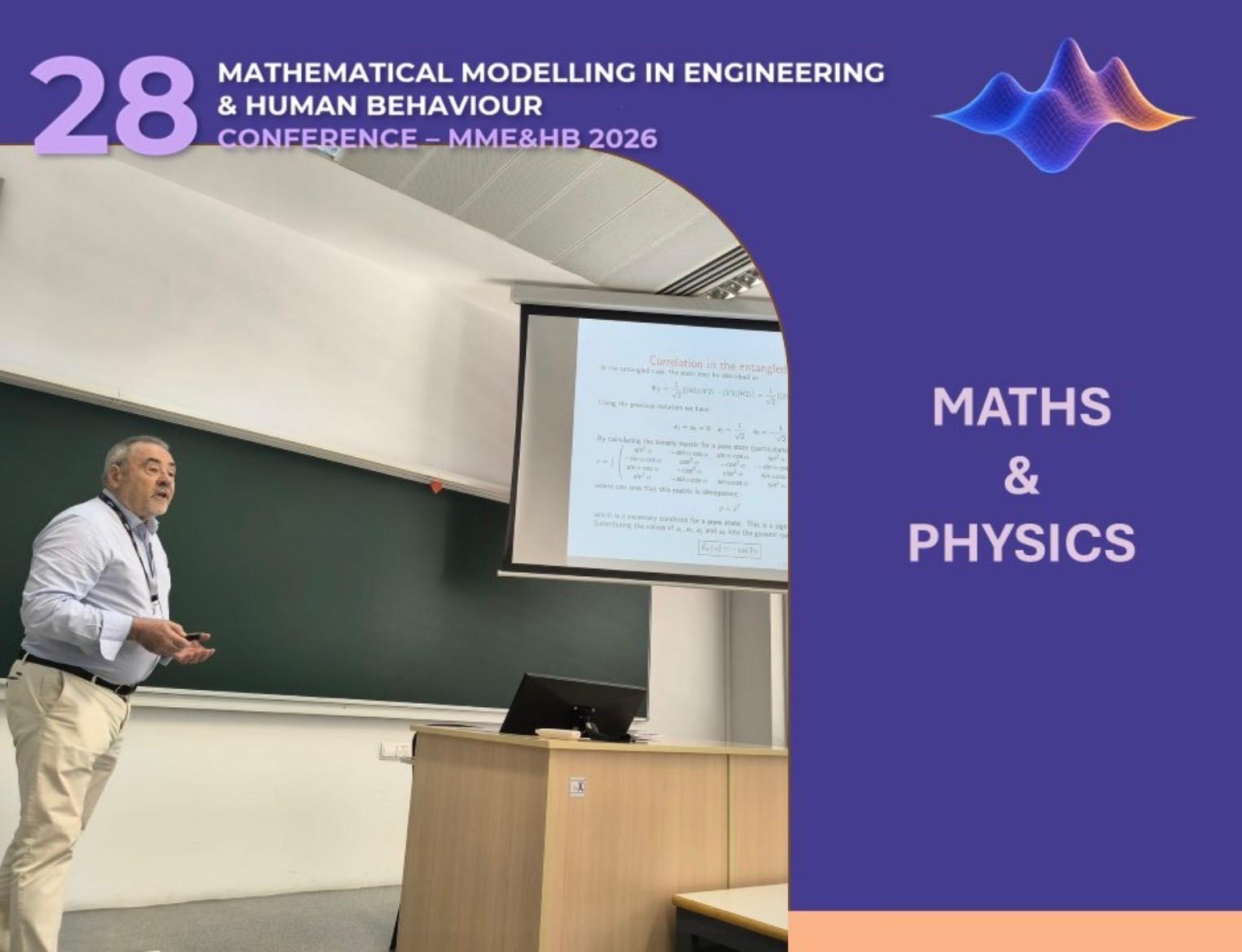
MATHS & PHYSICS
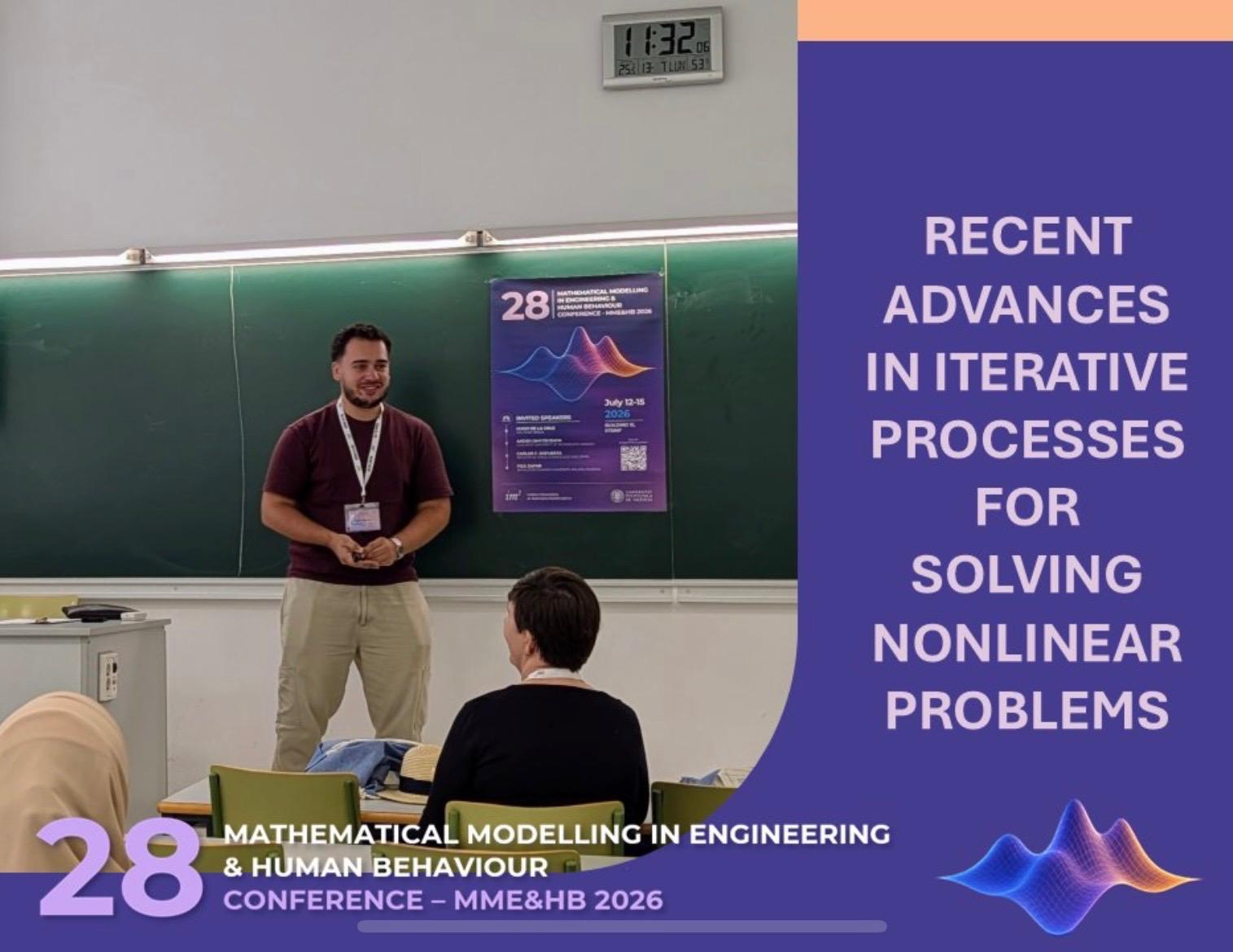
RECENT ADVANCES IN ITERATIVE PROCESSES FOR SOLVING NONLINEAR PROBLEMS
These sessions featured contributions related to mathematical modelling in public health, computational methods for engineering problems, applications of mathematics to physics, and recent advances in iterative methods for solving nonlinear equations.
Following a busy morning, participants enjoyed a lunch break that also provided an excellent opportunity for networking, exchanging ideas, and strengthening international research collaborations.
The scientific programme resumed in the afternoon with the second plenary lecture of the day, introduced by Alicia Roca.
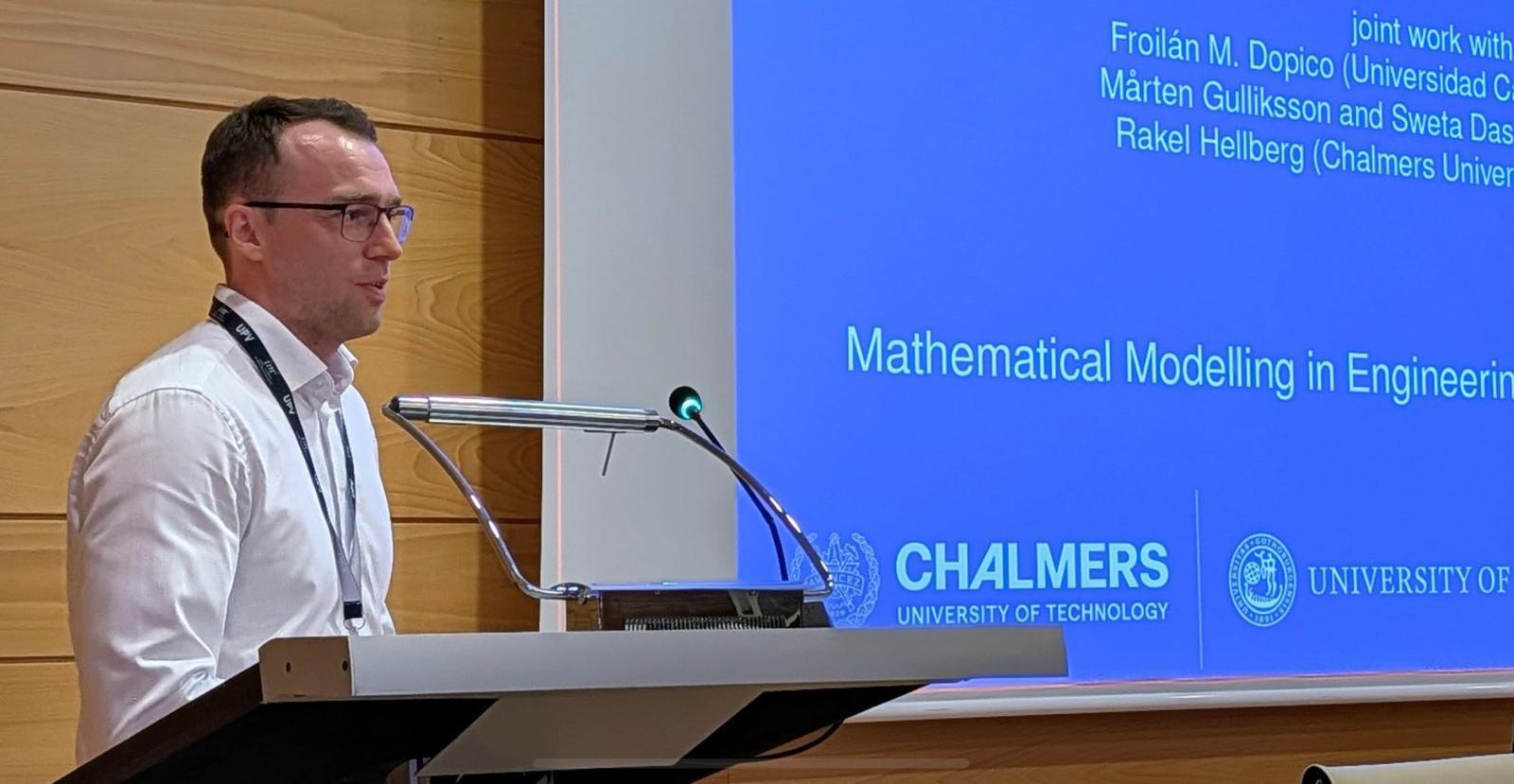
The lecture was delivered by Andrii Dmytryshyn, from Chalmers University of Technology and the University of Gothenburg (Sweden), under the title:
“LOW-RANK APPROXIMATION OF POLYNOMIAL MATRICES”.
During his talk, Dmytryshyn addressed one of the classical challenges in numerical linear algebra: the computation of low-rank approximations. In particular, he presented new techniques for approximating polynomial matrices by other polynomial matrices of prescribed rank and bounded degree, combining alternating-direction optimization methods with recent advances in generic eigenstructure theory and minimal-rank factorizations.
The day concluded with a second block of parallel sessions that maintained the high scientific level displayed throughout the conference:
DISEASES AND MATHEMATICAL MODELING IN PUBLIC HEALTH
MATHEMATICAL METHODS FOR ENGINEERING PROBLEMS
MATHS & PHYSICS
LINEAR ALGEBRA, MATRIX ANALYSIS AND APPLICATIONS
These sessions featured new research contributions in mathematical modelling, engineering applications, mathematical physics, linear algebra, and matrix analysis, fostering a rich and multidisciplinary environment for scientific discussion.
With this intensive first day, #MMEHB26 once again demonstrated its ability to bring together specialists from diverse research areas around mathematics and its applications, reinforcing its role as an international meeting point for the exchange of ideas, results, and future scientific collaborations.